Commercial Waste Removal in Belmont
Commercial waste removal in Belmont should give businesses a straightforward way to keep premises clear, separate recyclable materials sensibly, and move waste out without disrupting the working day. Our service covers the collection and disposal of everyday commercial waste streams, with an approach that keeps the process practical for shops, offices, workshops, hospitality venues and other local premises that need regular or one-off clearance support.
We handle a broad mix of business waste, from bagged refuse and cardboard to bulky items, old fixtures and materials that have built up after a refit, move or seasonal cleanout. The aim is to make disposal easier to manage while keeping materials sorted appropriately and handled with care. If you need to discuss a particular type of waste, start with the items you want removed and the access available, then request a quotation.
For many customers, the key is not only getting waste taken away but knowing the service can be shaped around the way their site operates. We work with clear instructions, sensible access planning and a focus on leaving the cleared space ready for its next use. If you need a simple and reliable commercial clearance solution, please get in touch to request a quotation.
Business waste collection and site clearances
Commercial waste collection can cover routine refuse as well as accumulated items that need a fuller clearance. That might include packaging from stock deliveries, out-of-date display materials, broken furniture from an office move or general non-hazardous waste that is no longer needed on site. A planned collection is often easier than trying to deal with waste piecemeal, especially when storage space is limited or access needs to remain open for staff and customers.
For premises that need a more extensive clear-out, our service can include work around cupboards, back rooms, storage areas and loading points. Business waste removal is a useful option when the waste belongs to a trading premises and you want a service geared toward commercial settings rather than domestic clearances. It can be particularly helpful after stock changes, refurbishments or office reorganisations where different waste types need separating before collection.
When you are ready to act, the simplest next step is to gather a brief outline of the waste types involved and the access conditions. If there are fragile items, lifts, narrow corridors or loading restrictions, mention them early so the work can be planned sensibly. The clearer the brief, the easier it is to arrange a quotation that reflects the actual job rather than a guess.
Premises, access and day-to-day operating needs
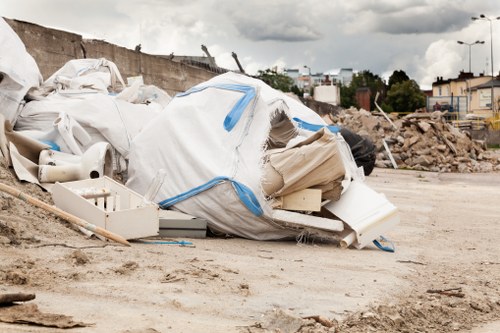
Businesses often need waste removed without interrupting customers, staff or deliveries. That can mean working around opening hours, using the correct entrance, or handling waste in stages so back-of-house areas remain usable. Our service is intended to fit into that practical routine, whether the job is a small uplift or a more involved clear-out from several parts of the premises.
Some sites generate mixed waste that needs a bit more care. Cardboard, light metals, furniture, appliances and general rubbish may all be present in one area, and each may need different handling once collected. We can support customers who need a tidy, organised approach to removal, with an emphasis on sensible segregation where it helps with disposal and recycling. Where applicable, this can reduce the amount of material going into a general waste stream.
Useful details to have ready when asking for a quotation include the approximate amount of waste, the sort of items involved, whether there are stairs or lifts, and whether collection needs to happen at a specific time. Pricing and quotes is a helpful page if you want to understand the sort of information that can support a more accurate estimate before you send a request.
Typical commercial waste types we can handle
Different businesses produce different waste, so a good removal service has to be flexible. Offices may need paper, packaging and outdated furniture taken away, while retail spaces may need shelf units, display items or surplus stock removed. Hospitality and food-related sites often have a combination of packaging, broken fittings and bulky items that are easier to take away in one managed collection rather than as several smaller tasks.
We also deal with clearance jobs involving items such as desks, chairs, tables, filing cabinets, shelving and non-hazardous fixtures. For some customers, the job is about clearing a single room; for others it is about creating space after a move, a fit-out or a change in layout. If you have mixed items, it is sensible to identify anything that may need special handling so the collection can be planned properly from the start.
- General commercial rubbish and bagged waste
- Office furniture and workspace clearances
- Packaging, cardboard and store-room waste
- Bulky items from refits or reorganisations
- Non-hazardous fixtures and fittings
Office waste removal and workspace clearances
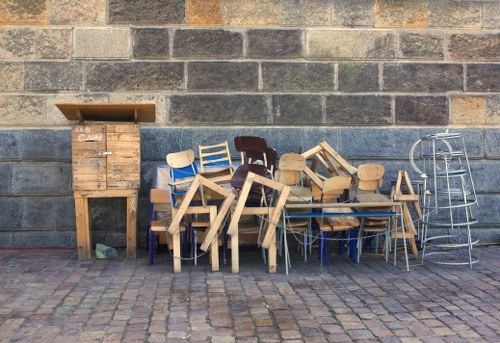
An office clearance usually needs a careful, orderly approach because furniture, documents, electronics and archive material can all be present in the same space. Our commercial waste removal service can support offices that are reducing occupancy, refreshing their layout or clearing rooms that have filled with redundant equipment. Where items are bulky, we can focus on efficient removal that keeps corridors, lifts and shared areas as clear as possible.
Office clearance suits customers who need more than a simple bin emptying service and want a fuller removal of unwanted office contents. This may include desks, chairs, storage units and other furnishings that no longer suit the business. If there are shredding or confidential disposal considerations, those should be identified separately so the right process can be arranged for the material involved.
In practical terms, office waste removal works best when the customer can point out what stays and what goes. That can be done with a short written list, room-by-room notes or a brief site walk-through. If there are access limits, parking constraints or items that need to be moved before collection, mention them in the same enquiry so the quotation can take account of the real working conditions.
Bulky items, fixtures and specialist disposal needs
Commercial premises often produce bulky waste that is awkward to move by ordinary means. Old furniture, reception items, storage units and broken fittings can all take up valuable space before they are removed. We can help with the lifting, loading and disposal side of that process, making it easier to clear a room without leaving awkward items behind because they are too large for standard bins.
Some customers also need a specific route for larger domestic-style items that have been used in a workplace setting. Furniture disposal is relevant where tables, chairs, cabinets or similar items need to be removed rather than retained or sold on. Where the items are especially bulky, or where the building has awkward access, the key factor is planning the removal sequence so the route through the property remains manageable.
It is also worth noting that some waste streams require a separate decision before collection. If you are unsure whether an item can be taken with the rest of the load, describe it clearly rather than leaving it out of the request. A short explanation of what the item is, where it sits and whether it is working or broken helps us assess the job more reliably and avoid unnecessary delays.
About Belmont
Belmont is a suburban district in the London Borough of Sutton, positioned between Sutton and Banstead on the southern edge of Greater London. The area is closely associated with the growth of suburban railway travel in the late nineteenth and early twentieth centuries, when residential development spread along routes connecting south London with Surrey. Its name is commonly linked with the elevated ground and open outlook of the area, and that sense of height is still reflected in the surrounding streets and long views from some of the higher points nearby. Belmont railway station remains an important local feature, giving the district a distinct focus within the wider borough and connecting it to the rail network that helped shape its expansion.
Recycling, sorting and responsible disposal
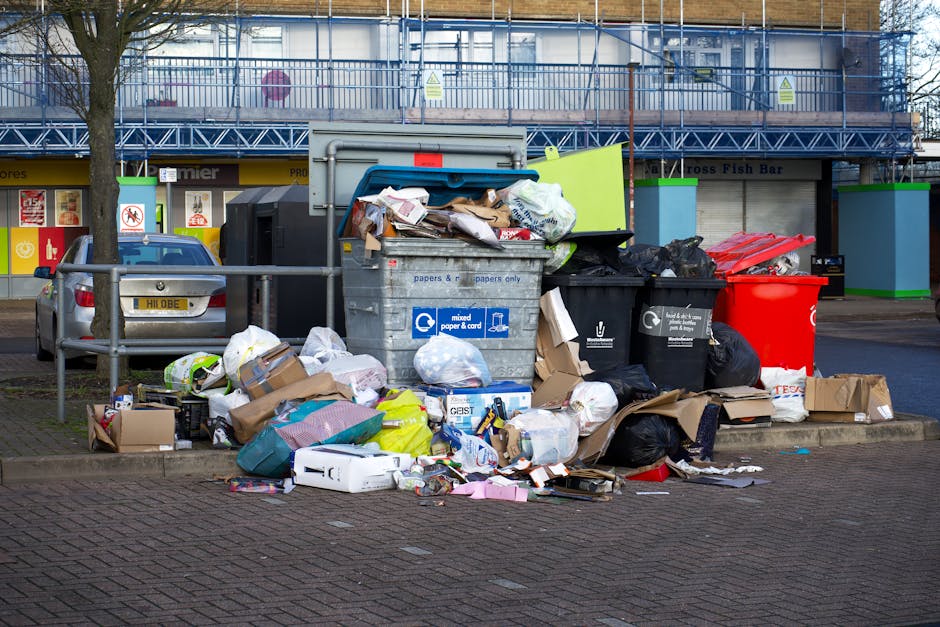
Commercial waste removal is not only about taking items away; it is also about making sensible decisions about what should be reused, recycled or sent on for disposal. Materials such as cardboard, metals, some plastics and reusable furniture may be handled differently from mixed general rubbish. A well-organised collection makes those choices easier because items are already grouped in a way that suits the disposal route.
Recycling and sustainability is a useful page for customers who want to understand how we approach materials that can be separated from general waste. We aim to support a practical balance between efficient clearance and responsible handling, particularly where a business has a regular flow of packaging or surplus items. This is often the difference between a one-off tidy-up and a more considered waste plan.
If your site produces recurring waste, it may help to think in categories rather than individual pieces. Grouping cardboard, furniture, loose rubbish and any items needing special attention can make the quotation process clearer and the collection itself more efficient. For businesses with ongoing needs, that preparation can also help identify whether a regular collection or an occasional clearance is the better fit.
Commercial clearances after changes, moves or refits

Many commercial waste jobs arise after a change in the way a business uses its space. A move, refit, reduction in storage or reset of a trading area can leave behind unwanted items that are too large or too awkward for ordinary disposal routes. Our service can support those transitions by removing redundant furniture, packaging, display materials and other non-hazardous waste that has accumulated during the change.
Home clearance is not the right fit for commercial premises, but the principle of clearing a space thoroughly applies across different environments. For business customers, the useful point is that items can be removed in a structured way rather than simply shifted from one corner to another. Where a site contains mixed waste from several rooms, it is usually best to prioritise the heaviest or most obstructive pieces first so the area becomes easier to work in.
To move forward, send a concise description of the waste, the location and the access available, then ask for a quotation. Contact us if you want to arrange commercial waste removal in Belmont and prefer to discuss the job before booking. We will use the details provided to shape a practical response, and you can decide whether the service is the right fit for your premises.
Choosing the right commercial waste removal service
Not every clearance needs the same level of handling, so it helps to decide what you want the service to achieve. Some customers need a simple uplift of bagged rubbish and packaging, while others need a fuller removal of furniture, fittings and accumulated items from several parts of a property. The most useful quotation is usually the one that matches the actual scope of work, not an assumed version of it.
When you compare options, think about the practical details that affect the job on the day. Access, parking, stairs, lifts, loading points and operating hours can all influence the arrangement. A business with a loading bay may need a different approach from a shop on a busy high street or an office with only shared access. Being upfront about those conditions helps keep the collection efficient and avoids unnecessary back-and-forth.
Our focus is straightforward: remove the commercial waste sensibly, keep the process clear, and make it easier for your site to get back to normal. If you are ready to request a quotation, use the contact details on the site and outline what needs to go, where it is located and when it is ready for collection. That is usually enough to start the process well.